A Heritage, Restored
Le programme des travaux de restauration comprend deux grands volets : la restauration extérieure et la restauration intérieure. Il est maintenant possible de parrainer une pierre de votre choix via notre campagne majeure.
A Large-Scale Project
Notre-Dame Basilica in Montreal remains the jewel of Old Montreal. As a must-see attraction, it continues to play an active role in the urban fabric of the city of Montreal. Built between 1824 and 1829, the main body of Notre-Dame is sixty-five meters long and thirty-seven meters wide. The towers were built between 1841 and 1843 and rise sixty-five meters above the forecourt. The Basilica is a tour de force of massive masonry. Its stones are of paramount importance to the history of Montreal.
The west tower is called La Persévérance. Since 1848, it has housed one of the largest bells in the world, the bronze bourdon named Jean-Baptiste, weighing over 10,000 kilograms (eleven tons). The east tower is called La Tempérance. It has a carillon of ten bells. The bell and the carillon bells were all cast at the Whitechapel Bell Foundry in England.
Given the advanced age of the stones (soon to be 200 years old) and the significant presence of stylolites (sedimentation beds) in them, which promote erosion and, consequently, greater permeability during inclement weather. When the building envelope was originally constructed in the 19th century, there were no flashings to protect the architectural stone bands from the elements, such as snow or rain. Lead flashings were installed belatedly in the 1930s. Over time, pressure from the elements caused cracks to form throughout the masonry, particularly in the upper parts of the walls and towers.
On the west tower side, water infiltration into the massive masonry caused facing stones to shift, creating dangerous situations that threatened the integrity of the towers and public safety. These situations were addressed with temporary safety measures that were kept under surveillance. The east tower has suffered severe damage, including numerous cracks and fractures in the stones, the hollowing out of mortar joints, and the displacement of stones. Work similar in scope to that carried out on the west tower will soon be undertaken on the east tower, which will take more than two years to complete.
Restoration of the towers is underway. In addition to the inevitable repair and replacement of numerous stones, this includes maintenance of wooden elements, including windows and sound baffles—structures similar to shutters placed in front of the bells to project the sound they emit—which must be repaired and repainted. Waterproofing membranes are also being installed on the upper levels, metal flashings are being replaced, and the interior masonry of the bell towers is being repointed.
This masonry work requires great care and time. As the basilica remains functional, special measures are being taken to ensure public access and worker safety. Step by step, sections of facing are being removed and replaced with new limestone blocks of the same type as the original stone, which time will harmonize with the stones left in place.
Previously, the main façade between the two towers, whose crenellated parapet was threatening to collapse, was restored and the upper part of the wall rebuilt. The three magnificent statues, placed in the niches in 1865, were in a state unworthy of their artistic value. With the help of the Quebec Conservation Center, they were restored with finesse and care during the first phase of this project in 2021. For information, these statues were cast in cement, using a patented technique, by Geatano Baccerini (1825-1895) based on plaster models by sculptor Charles-Olivier Dauphin (1807-1874): the Immaculate Conception (representing Montreal), Saint John the Baptist (representing Quebec), and Saint Joseph (patron saint of Canada).
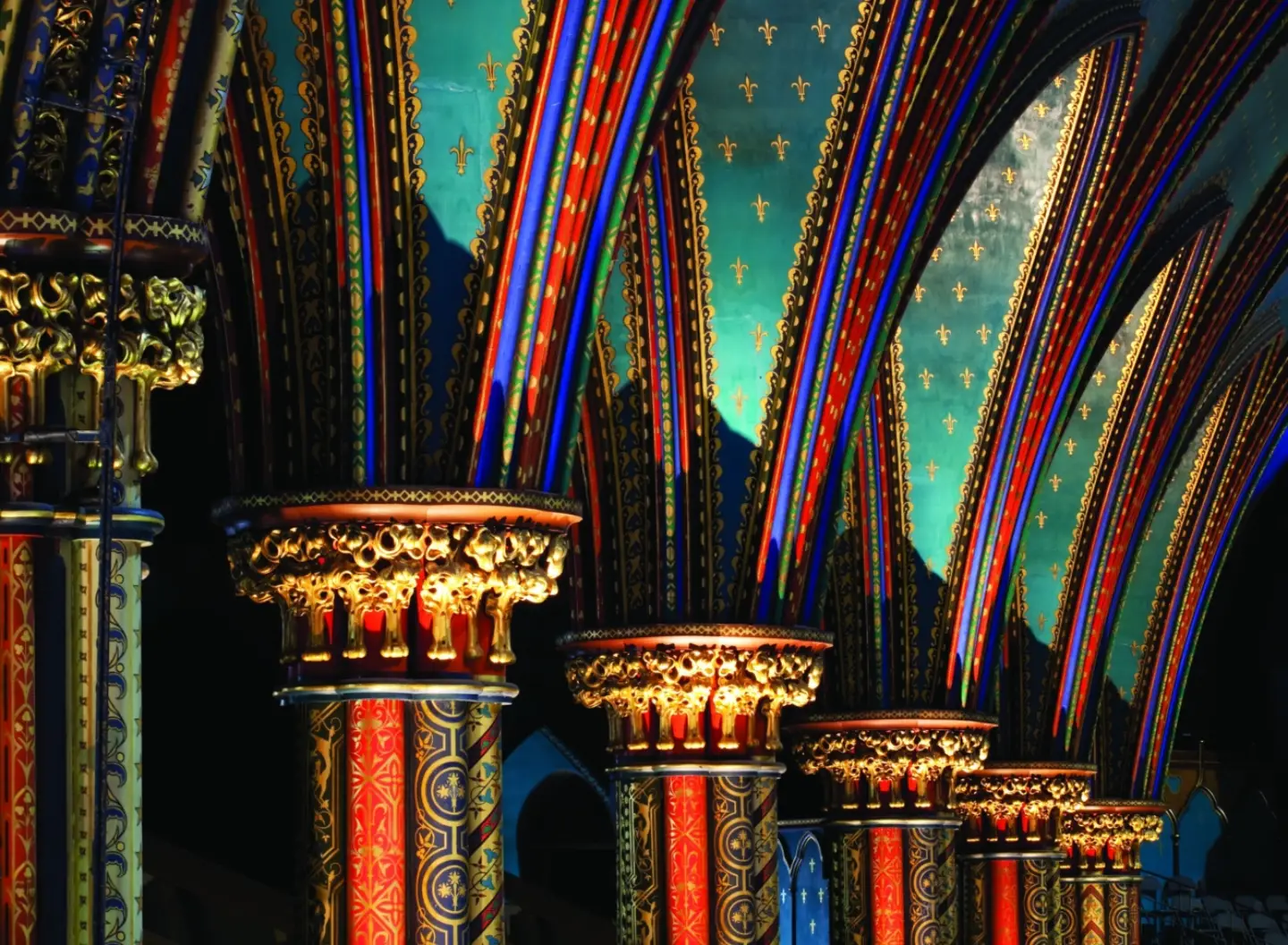
The interior decoration of the Basilica was originally designed by architect James O'Donnell in a minimalist style. Between 1872 and 1880, a second decorative program was added, designed and directed by renowned architect Victor Bourgeau in a much more elaborate Gothic style. This explains the contrast between the sober exterior and the dazzling interior with its polychrome decor and gold leaf painting. From paintings to sculptures, rosettes to stained glass windows, polychrome decor to gold leaf, the interior restoration will also require significant financial efforts on the part of the Notre-Dame de Montréal parish.
In order to preserve the austere majesty of the exterior and interior beauty of our Basilica, Notre-Dame needs your support. This iconic place must remain timeless for as long as the history of Montreal continues.
We thank you for your generosity.